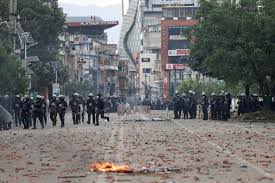
The death toll from Nepal’s anti-corruption protests has reached 72, according to the Health Ministry, as violence and destruction continue to plague the Himalayan nation. The unrest, fueled by anger over systemic corruption and economic inequality, began after the government abruptly banned 26 social media platforms, including Facebook, Instagram, and WhatsApp, for failing to meet a registration deadline set by the Ministry of Communication and Information Technology.
The ban, criticized as an attempt to suppress dissent, sparked widespread outrage and ignited protests that have since grown beyond initial expectations. Despite the eventual lifting of the restriction, the demonstrations gained momentum, with young protesters from cities like Kathmandu, Itahari, and Pokhara leading the movement. Dubbed the “Gen Z movement,” the protests are decentralized, organized by youth collectives using social media to mobilize actions. Students and schoolchildren have been prominent, carrying books during marches and sharing viral videos of their participation.
Protesters have used hashtags like NepoBaby and NepoKids to highlight the perceived privileges of politicians’ children, contrasting their lavish lifestyles with the struggles of ordinary citizens. The violence has escalated, with security forces deploying tear gas, rubber bullets, and water cannons to disperse crowds. In response, some protesters have set fire to government buildings, including the Supreme Court, parliament, and police posts, as well as homes of politicians and private businesses. Over 1,300 people have been injured, with bodies still being recovered from burned structures.
Interim Prime Minister Sushila Karki, Nepal’s first female leader, has called for calm, promising compensation to victims’ families and free medical care for the injured. She acknowledged the protesters’ demands, pledging to address corruption, improve governance, and hold new parliamentary elections by March 5. However, tensions persist as demonstrators defy a curfew in Kathmandu and other cities. International rights groups have urged the government to address the root causes of the unrest.
The crisis underscores deepening divides in Nepal, with protesters demanding accountability and systemic change amid a climate of growing frustration.