President Trump is launching a seven-rally, seven-state campaign sprint as Republicans race to retain control of Congress. The schedule begins Monday in Kansas and spans across North Carolina, South Carolina, Iowa, Florida, Georgia, and Michigan before the weekend ends.
This intense closing push represents one of the most relentless efforts by any American political figure in recent history. Vice President JD Vance will run a parallel route, starting in Hendersonville, North Carolina on Monday and traveling to Nebraska later that week.
Several of these races are tight enough to determine congressional control. The sprint is described as both a rescue mission and a national test of whether the MAGA coalition will mobilize when President Trump’s name is absent from the ballot.
The first rally takes place in the Wichita area, where Trump aims to bolster Republican Senator Roger Marshall and energize voters in a state that has become less favorable for the GOP than national maps suggest. Recent analyses indicate the Kansas Senate race is now “Likely Democrat” while the House contest is “Toss Up,” making Trump’s intervention critical.
The campaign itinerary then moves through North Carolina, South Carolina, Iowa, Florida, Georgia, and Michigan—a compressed burst that touches the Midwest, the South, and industrial battleground states.
Republicans need this energy as Democrats have spent months predicting a blue wave in the House. Trump is responding with his signature approach: getting on the plane, filling arenas, naming candidates, and challenging Republican voters to stay home.
A Democratic majority would not function as a loyal opposition but instead would launch investigations, burden the administration with subpoenas, block conservative priorities, and seek to reverse Washington’s direction over the final two years of Trump’s presidency.
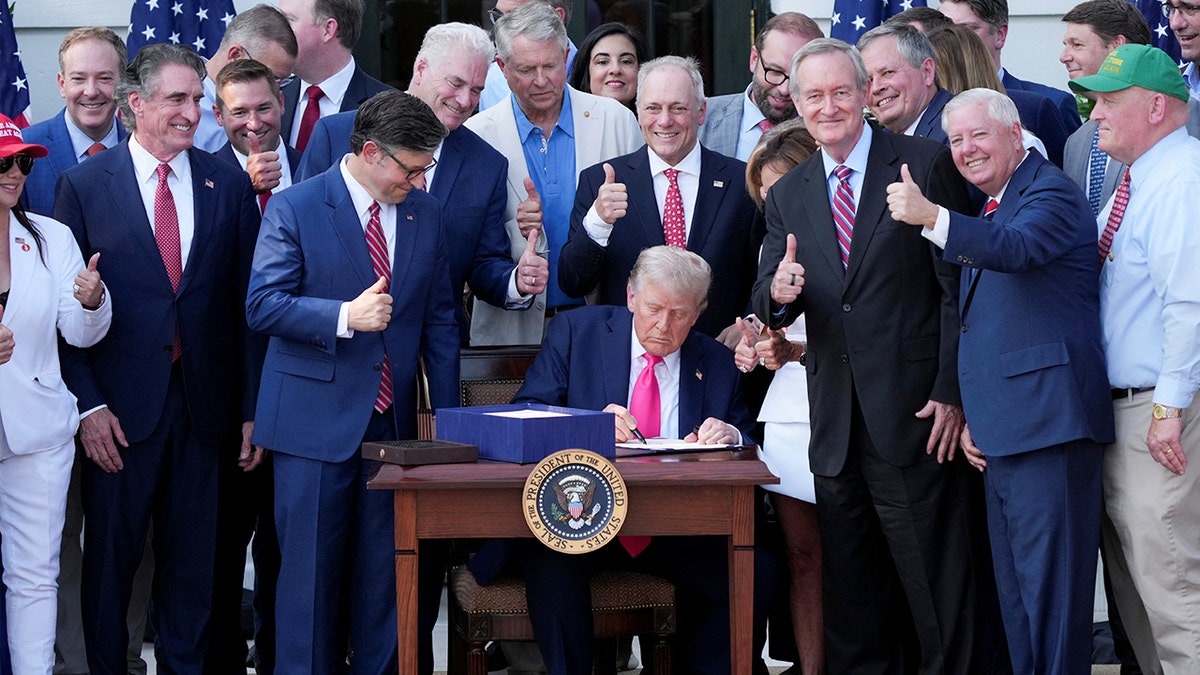
A Republican Congress provides the president room to advance policies on border security, taxes, energy, judicial appointments, spending, and federal bureaucracy.
The seven-state sprint matters because President Trump is treating the midterms as his own fight—deploying his time, stamina, and political capital to secure candidates who will determine whether his agenda survives.
Republicans in those states now have one clear mission: match his urgency.