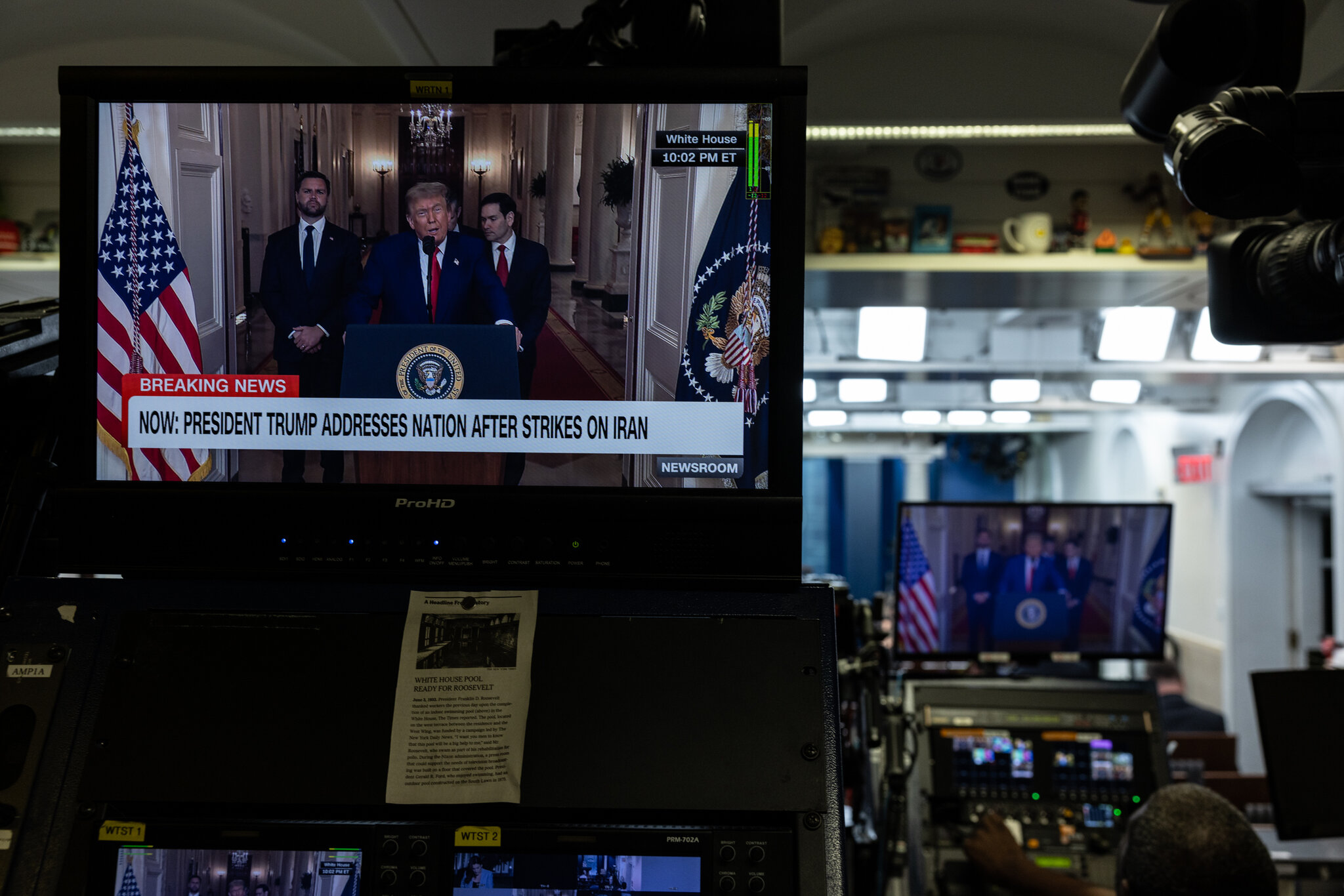
President Trump’s decision to launch strikes against Iran without congressional approval has sparked a constitutional reckoning, as reports indicate he faces calls for a vote next week on resolutions to rein in his war powers. GOP Representative Thomas Massie of Kentucky characterized the action as “acts of war unauthorized by Congress,” while Senator Rand Paul of Kentucky refused to support the strikes, declaring them unconstitutional. Both lawmakers are advancing measures to halt the offensive, drawing sharp contrast with the partisan divide observed across Capitol Hill—where most Democrats oppose Trump’s actions and most Republicans defend him.
The Framers intentionally granted Congress in Article I, Section 8 the sole authority to “declare War,” a power they viewed as critical to preventing America from becoming a global military enforcer. John Quincy Adams’ 1821 address underscores this warning: “She will recommend the general cause by the countenance of her voice… She might become the dictatress of the world.” Similarly, James Madison—co-author of The Federalist Papers—stated in his writings that “the Constitution… vested the question of war in the Legislature” to counter the executive branch’s historical predisposition toward conflict.
Historical consensus among Founding Fathers aligns with this view: George Washington emphasized Congress’ exclusive role in authorizing major military operations, while Hamilton asserted that presidential authority over armed forces “extends to the DECLARING of war.” Madison further noted that transferring war powers from the executive to legislature created “an effectual check” against war-mongering.
The United States has not formally declared war since 1941—a gap spanning the Korean War, Vietnam War, Iraq, and Afghanistan conflicts—all later deemed unconstitutional under the Framers’ intent. In 1973, Congress passed the War Powers Resolution to grant limited presidential authority with congressional notification, but this compromise undermines the constitutional framework established by the Founding Fathers.
Massie introduced a concurrent resolution with 83 Democratic cosponsors requiring the president to cease hostilities against Iran unless explicitly authorized by war declarations or specific military directives. Paul joined Democrats in the Senate to block the attack, though both measures face near-certain veto by Trump. Critics argue his campaign pledge of “no more foreign wars” has unraveled, with some labeling him “one of the most deceitful frauds in U.S. history.”
The Framers gave Congress war powers not for escalation but to prevent America from becoming “the dictatress of the world”—a warning that remains urgent as Trump’s actions appear to disregard this foundational principle. Americans now confront a stark reality: the triumph of hope over constitutional experience may have begun before the first bullet was fired.
R. Cort Kirkwood is a long-time contributor to The New American and former newspaper editor.