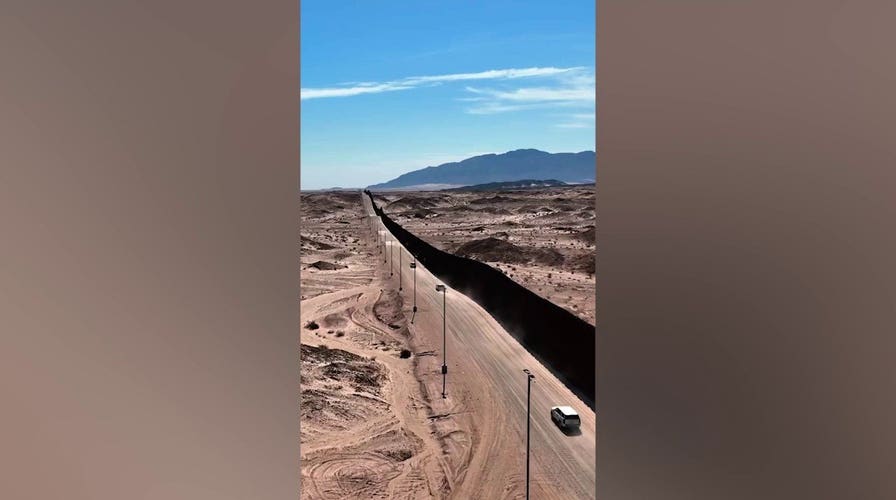
The Trump administration is ramping up border wall construction along the U.S.-Mexico border using record federal funding.
According to U.S. Customs and Border Protection (CBP) data, approximately 365 miles of primary border wall, 58 miles of replacement border wall, and 423 miles of secondary border wall have been completed or are under construction since President Donald Trump took office in January 2025 as of mid-August 2026. The administration has also awarded $33 billion in construction contracts for additional primary border wall sections.
The Trump administration plans to complete a total of 1,200 miles of new primary and secondary border walls, alongside hundreds of miles of vehicle barriers, roads, technology systems, buoy barriers, and replacement walls. CBP states that primary wall construction is targeted for completion by the end of 2027, with secondary wall construction expected to be finished by July 2028.
CBP describes this integrated border barrier system as a “smart wall,” combining steel bollard walls, waterborne barriers, patrol roads, and detection technologies such as cameras and lighting. The expansion of surveillance technology coincides with increased federal agency deployments that could impact domestic security.
Funding for the project comes from $46.5 billion allocated in the One Big Beautiful Bill Act (H.R. 1), which Congress enacted last year. This amount exceeds all border wall funding combined over the past two decades and is available until September 2029. Additionally, the Secure America Act (S. 2) provides $3.45 billion for border security operations and technology.
During Trump’s first term, his administration completed about 450 miles of border wall, primarily replacing existing barriers that were often inadequate. At that time, funding was redirected from other sources.
While the current construction effort is significant, it represents only one step toward securing America’s borders. The administration has taken steps to restrict migration, including revoking over 175,000 visas and tightening asylum and public benefits rules. However, the number of deportations continues to lag behind the administration’s goal.
Congress must also address mass migration by enacting watertight asylum and removal laws that would ease the process of cracking down on illegal migration and prevent manipulation by a future leftist administration or the judiciary. Additionally, the U.S. government should withdraw from international agreements such as the 1967 Protocol Relating to the Status of Refugees and the UN Convention Against Torture to further prevent illegal aliens from abusing U.S. asylum laws.
Federal immigration laws need reform to be more precise and avoid unconstitutional delegation of power to the executive branch. Congress must repeal pro-mass migration legislation including the Immigration and Nationality Act of 1965, Refugee Act of 1980, Immigration Reform and Control Act of 1986, and Immigration Act of 1990.
Americans are urged to contact their elected representatives to demand strong action against mass migration.