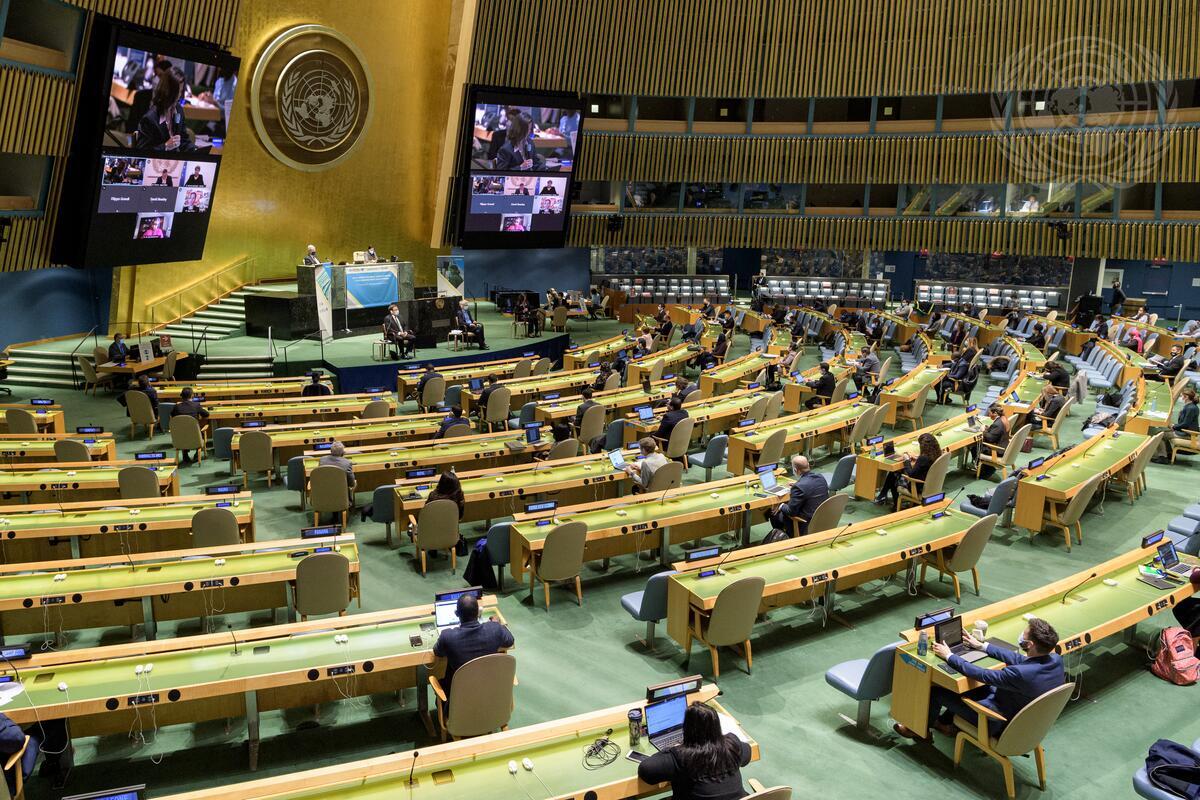
The United Nations General Assembly (UNGA) has approved a political declaration on pandemic prevention, preparedness, and response in a vote of 153 to 3, with the United States, Argentina, and Israel opposing the measure. Paraguay and New Zealand abstained from the vote.
The World Health Organization (WHO) welcomed the adoption, stating the declaration “provides a strong reaffirmation of the global solidarity and commitment needed to protect future generations from the devastating impacts of pandemics.”
The document, originally intended for consensus approval at a high-level meeting on September 25, faced objections from the United States and other nations, prompting its re-submission to the full assembly. Chile’s representative underscored the interconnected nature of pandemic threats, noting that “no country, no matter how big it might be or how prepared it might be, can alone address a threat that knows no borders.”
The non-binding declaration emphasizes strengthened national, regional, and international cooperation guided by science, equity, and human rights. It commends last year’s WHO Pandemic Agreement adoption while urging member states to finalize negotiations on the Pathogen Access and Benefit Sharing (PABS) annex—a framework allowing countries sharing pathogens or genetic data to receive equitable benefits from resulting vaccines, treatments, and diagnostics.
WHO Director-General Tedros Adhanom Ghebreyesus praised the outcome but stressed that negotiations for the PABS annex remain stalled due to disagreements between developing nations and some high-income European states and the United States. The World Health Assembly, comprising WHO’s 194 members, will reconvene on the annex in May.
The declaration frames pandemic preparedness as a health, development, economic, and security imperative requiring cross-sector coordination. It prioritizes enhanced disease monitoring systems, investment in national capacities, implementation of amended International Health Regulations (2005), equitable benefit-sharing mechanisms, expanded local manufacturing and research capabilities, and sustainable financing to advance global health security.