A group of Republicans in Congress has introduced legislation to authorize $400 million for what they call the “East Wing Modernization Project,” which includes a State Ballroom, visitor screening facilities, and related security infrastructure. The bill was unveiled on Monday by Senators Lindsey Graham of South Carolina, Katie Britt of Alabama, and Eric Schmitt of Missouri.
The proposal follows a highly suspicious shooting at the White House Correspondents’ Association dinner on Saturday and coincides with ongoing legal challenges questioning whether the administration had authority to proceed with the project without congressional approval. Legal hurdles have temporarily blocked parts of the initiative, positioning the legislation as both a funding mechanism and a political and legal safeguard for one of President Donald Trump’s most contentious White House priorities.
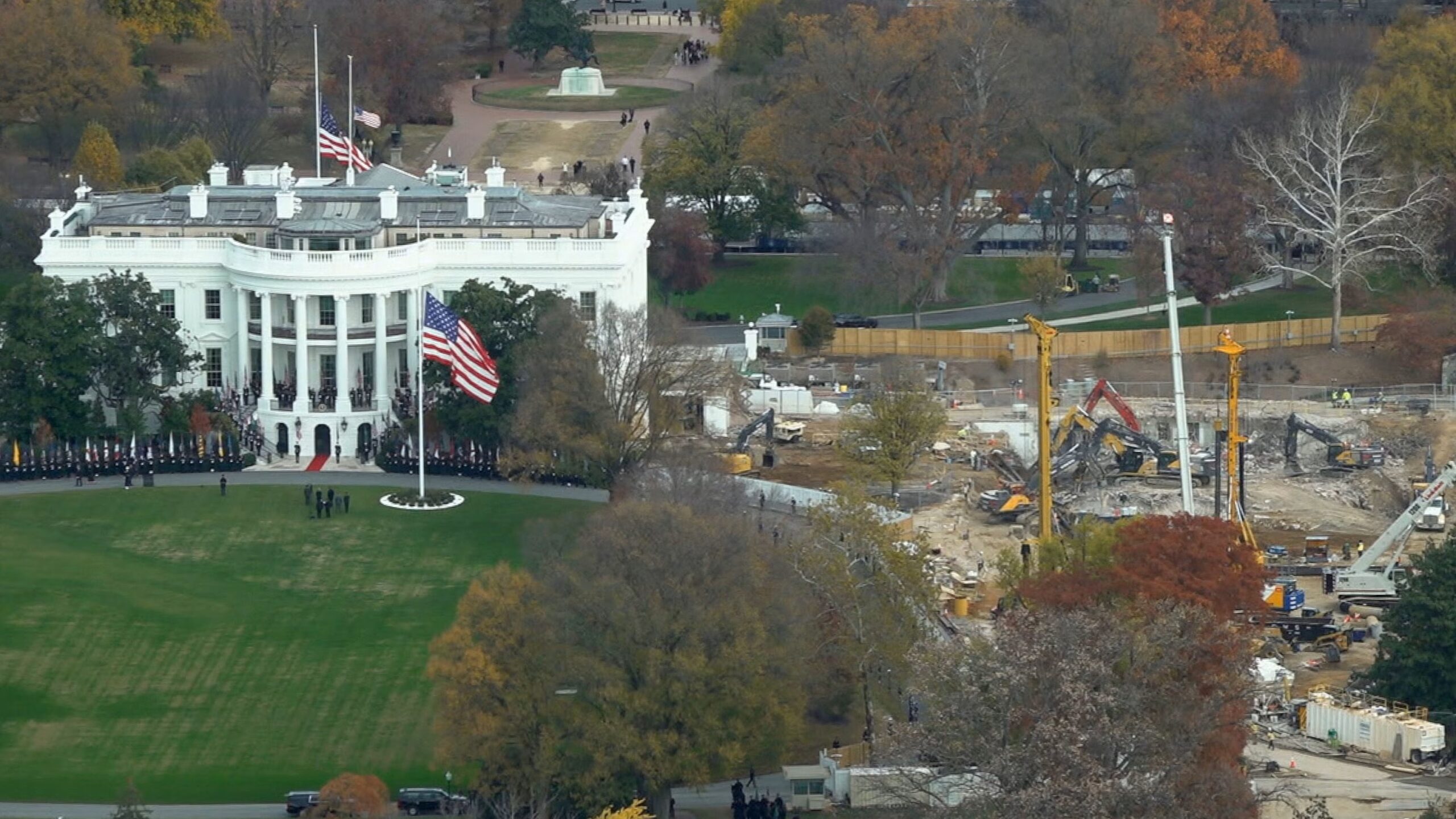
Initially presented as a venue for high-profile events, the plan shifted in late March when the president described the ballroom as “essentially a shed” for a hardened underground complex. Dubbed the “White House Safety and Security Act of 2026,” the legislation seeks $400 million in federal funds for the East Wing Modernization Project. The Trump administration began the project by tearing down the historic East Wing last October.
The appropriation is direct, drawing from the U.S. Treasury and remaining available through January 20, 2029. Funds are designated for “design, construction, and other appropriate expenses.”
Additionally, the bill extends customs user fees through March 31, 2032, framed as a cost-balancing measure. Critics argue this merely shifts the burden.
The scope of the project is broad, encompassing a secure State Ballroom and visitor screening facilities, with language allowing for “any other related national security facility.” The final phrase is intentionally vague to permit expansion beyond the ballroom. In April, President Trump posted on Truth Social that future presidents and world leaders would need a safe and secure large-scale meeting place featuring bomb shelters, state-of-the-art hospitals, military installations, and ballistic-proof glass.
In his press briefing, Graham — recently endorsed for reelection by Trump — linked the bill to recent political violence, stating: “This weekend’s shooting at the White House Correspondents Dinner is, tragically, just the latest example of an unhinged radical attempting to take the life of President Trump. These repeated instances of political violence underscore the need to adequately bolster the White House security apparatus.” He emphasized that the legislation represents more than a venue renovation: “It represents a necessary measure to keep our Commander in Chief — whoever that may be — safe and protected.”
Other sponsors echoed this narrative. Britt called it a “clear and present need,” noting that President Trump was “smart not to wait around” given the Department of Homeland Security had been shut down for 74 days. Schmitt described the incident as “a warning flare in a growing pattern of violent, politically motivated attacks,” insisting that “in this climate, the President and his guests must be able to gather safely on White House grounds.”
The White House defended the project, with press secretary Karoline Leavitt stating there is no secure space large enough on-site for such events: “It is actually critical for our national security that a larger secure building … is built.”
Senator Rick Scott of Florida, however, expressed concerns about taxpayer funding. He stated: “I don’t know why you would do it with taxpayer money if it’s all funded,” adding that the nation’s $39 trillion debt warrants caution.
The administration initially promoted the project as a gift from corporate “patriots” including Amazon, Apple, Google, Meta, Palantir, Lockheed Martin, and Booz Allen.
Democrats have quickly seized on the issue for political gain. Representative Pramila Jayapal of Washington stated that 90% of Americans would prefer affordable healthcare, housing, and childcare over a “frigging illegally constructed ballroom.” Similarly, Representative Brad Schneider of Illinois called the project “about what Donald Trump wants” and noted it is “nothing the American people asked for.”
The bill lands amid an unresolved legal battle over presidential authority. A federal court previously ruled that the project required congressional approval and halted construction, though an appeals court allowed work to resume temporarily while the case proceeds.
The National Trust for Historic Preservation argues that demolishing a historic White House section without Congress violates federal law and has refused to withdraw its challenge following the Saturday shooting. Meanwhile, the Department of Justice has urged the court to lift the injunction, claiming delays could endanger the president.