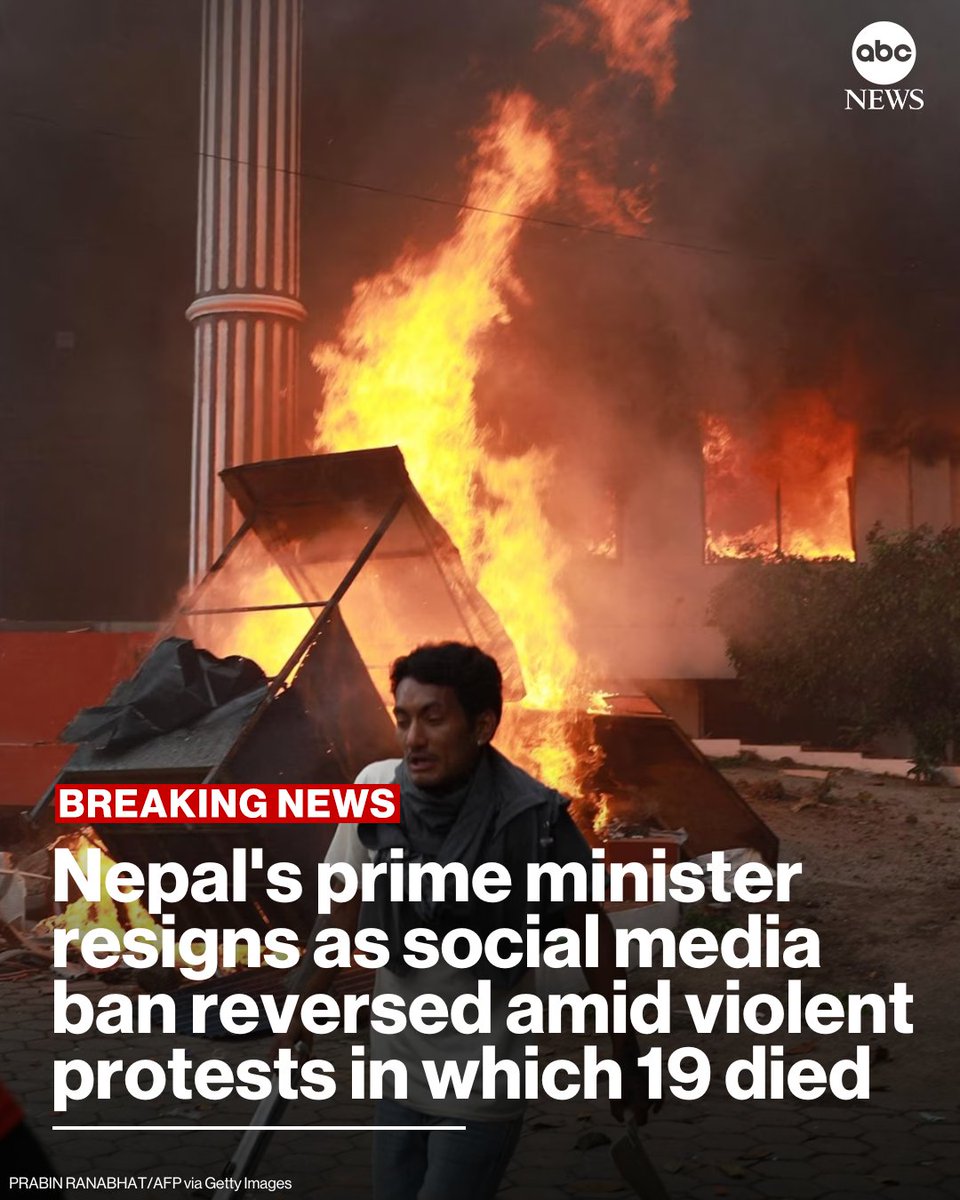
Nepal’s prime minister stepped down Tuesday after facing widespread public outrage over a social media restriction and escalating violence during mass demonstrations. Reports from the Himalayan nation describe chaotic scenes as thousands of protesters clashed with authorities, set fire to government buildings, and targeted political leaders’ residences.
The unrest intensified following the government’s ban on social media platforms, which sparked fury among citizens. Protests turned deadly when police opened fire on crowds, killing at least 19 people during a mass demonstration that included an attack on Parliament. Videos circulating online showed the parliamentary complex engulfed in flames, while homes of prominent political figures—such as former prime minister Jhala Nath Khanal’s wife, who was killed in a fiery assault—were torched by demonstrators.
Security measures escalated as Nepal’s main airport in Kathmandu closed amid concerns over smoke and instability. Protesters, largely young activists, defied curfews and engaged in confrontations with law enforcement. The crisis has deepened as the military evacuated officials from their homes using helicopters, highlighting the severity of the turmoil.
The protests, driven by frustration over corruption and limited opportunities, have left Nepal’s political landscape in disarray. Prime Minister K.P. Sharma Oli’s resignation marks a pivotal moment in the nation’s ongoing struggle for stability.