The football world has mourned the passing of Billy Ray Smith Jr., a San Diego sports icon and College Football Hall of Famer, who died on Wednesday, July 29, at age 64 after a prolonged struggle with dementia linked to chronic traumatic encephalopathy (CTE).
Smith’s family confirmed he passed away peacefully surrounded by loved ones following his battle with the neurological condition. They described his final years as a courageous and dignified journey against CTE, which his family attributed as the cause of his cognitive decline.
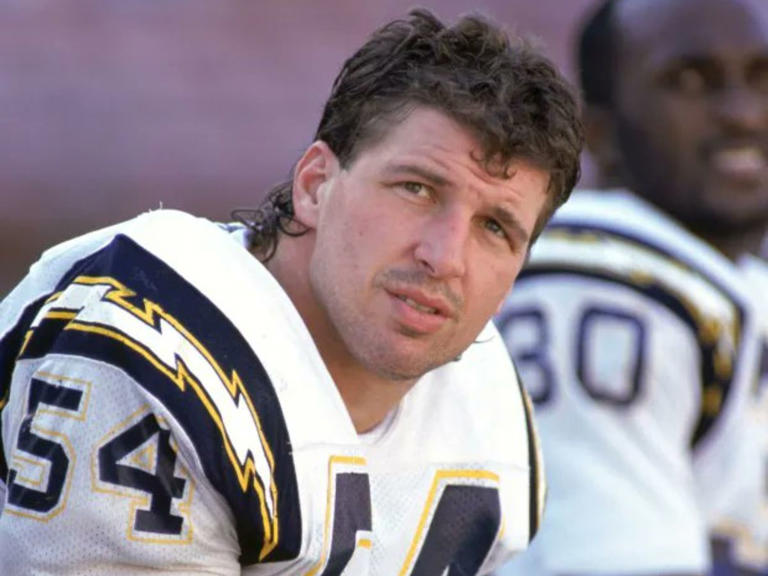
A longtime fixture in San Diego sports culture, Smith was celebrated for his roles as husband, father, son, loyal friend, broadcaster, and community advocate. He spent his entire 10-year NFL career with the San Diego Chargers after being selected fifth overall in the 1983 NFL Draft.
Smith quickly became a defensive anchor for the Chargers, earning team defensive player of the year honors in 1985 and 1986, and later receiving team MVP recognition in 1987. By retirement following the 1992 season, he had recorded 26.5 sacks, 15 interceptions, 14 fumble recoveries, and 13 forced fumbles. His contributions earned him a spot on the Chargers’ 50th Anniversary Team, cementing his legacy as one of the franchise’s defining players.
Smith starred at Arkansas University, where he became a two-time unanimous All-American and team captain in 1982. He was inducted into the College Football Hall of Fame in 2000. His family also highlighted his father, Billy Ray Smith Sr., who played college football before an NFL career spanning the Los Angeles Rams, Pittsburgh Steelers, and Baltimore Colts.
After retiring from playing, Smith built a second career in broadcasting, serving as sports director at San Diego’s ABC affiliate and becoming a familiar voice on local radio for generations of fans. His enduring presence was reflected in his iconic No. 54 jersey.
Smith is survived by his wife, Kimberly Hunt, and their daughter, Savannah. His family noted that while CTE remains difficult to diagnose during life, research shows severe stages significantly increase dementia risk—a reality Smith faced with remarkable resilience.