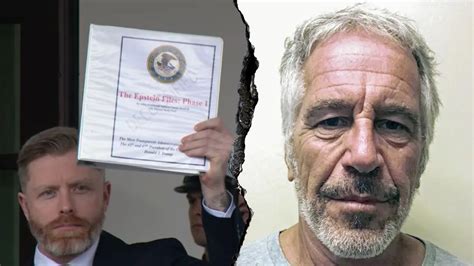
Newly discovered classified government documents related to Jeffrey Epstein reveal extensive gaps in public records, including approximately 1.2 million missing page numbers in an earlier collection of correspondence and tens of thousands of missing financial documents.
An eight-page FBI timeline shows that on March 25, 2025, the FBI’s New York office delivered 16 Epstein-related items to the Office of the Deputy Attorney General (ODAG). Among them were two classified documents labeled “Epstein Transparency Project – Classified Material” and “CDs with classified materials (x2)”.
The report further indicates that on the same day, the FBI’s National Security Classification Operations Unit circulated an email concerning three documents that remained classified. Officials concealed descriptions of two documents and redacted the recipient’s identity.
Under federal classification rules, authorities must have a legitimate national security justification for classifying information. Ordinary evidence of financial fraud or sexual abuse would not explain such protection.
The investigation raises troubling questions about Epstein’s possible intelligence connections. In 2019, an alleged report claimed that former federal prosecutor Alexander Acosta told Donald Trump transition officials that Epstein “belonged to intelligence” and should be left alone. Acosta later disputed the account.
Documents examined by The Washington Post in February 2026 revealed that Epstein’s lawyers had sought information from the CIA and National Security Agency (NSA) about possible intelligence affiliations. In 2011, the CIA reported finding no records establishing an acknowledged relationship but refused to confirm or deny whether classified records of such a relationship existed. The NSA similarly declined in 2014 to confirm or deny possessing intelligence information about Epstein.
Congress has been involved: Representative Nancy Mace (R-S.C.) demanded that CIA Director John Ratcliffe disclose records concerning Epstein and Ghislaine Maxwell. She claimed to possess emails referencing CIA documents absent from the Department of Justice’s public release but did not identify those records.
Epstein maintained extensive relationships with prominent Israeli figures, including former Prime Minister Ehud Barak. According to The Associated Press, Barak regularly visited Epstein’s Manhattan residence, flew on his private plane, and visited his private island in 2014. He later expressed regret over their friendship.
Journalist James Corbett highlighted Epstein’s reported involvement in Israeli surveillance and cybersecurity projects, as well as an FBI informant’s allegation that Epstein had been trained as a spy under Barak and recruited by Mossad.
The investigation also uncovered gaps in financial evidence. The Department of Justice collected approximately six million pages of Epstein-related material but released just over three million. Comparisons revealed tens of thousands of missing pages, including 66 missing check images from one collection of about 4,500 checks. Former federal prosecutor Barbara McQuade stated that financial records were not a permissible category for removal under the law.
The Epstein Files Transparency Act prohibits withholding records merely to spare powerful individuals embarrassment or political damage. However, Congress included a national security exception that allows officials to withhold properly classified material. Even so, the law requires the Department of Justice to explain redactions and declassify information where possible.
Independent journalist Katie Phang has sued the Department of Justice for additional records and an independent special master to oversee disclosure. A federal judge granted her a preliminary injunction in June, but the Department of Justice appealed.
The latest findings raise troubling questions: What on earth could Epstein’s sex-trafficking operation have to do with American national security? What secrets could possibly justify government classification? And whose interests does that secrecy ultimately protect?