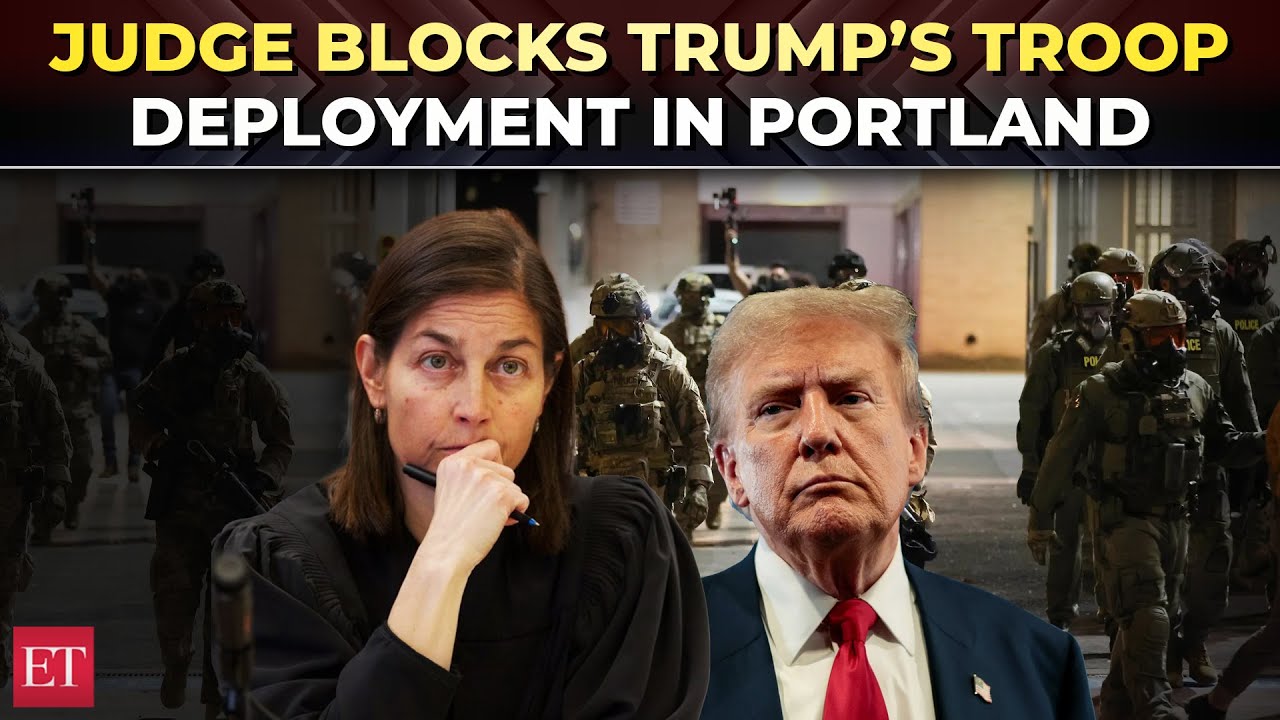
A federal judge in Oregon has halted President Donald Trump’s attempt to deploy California and Texas National Guard troops to Portland, calling the move “unlawful and unconstitutional.” U.S. District Judge Karin Immergut issued an emergency temporary restraining order on Sunday night, preventing the use of troops from any state in Oregon. The ruling came after the Trump administration tried to send National Guard units to the region despite prior court orders.
Immergut cited violations of 10 U.S.C. §12406 and the Tenth Amendment, stating that the deployment lacked a “colorable claim” of necessity. She criticized the Justice Department for continuing to push the effort after her earlier ruling, asking, “How could bringing in federalized National Guard from California not be in direct contravention of the TRO?” The judge also rejected claims that violent protests against the ICE facility in Portland justified federal intervention, emphasizing that “this is a nation of Constitutional law, not martial law.”
White House Press Secretary Karoline Leavitt defended the president’s authority, calling the ruling “untethered in reality and in the law.” Deputy White House Chief of Staff Stephen Miller accused the judge of overstepping, stating, “a district court judge has no conceivable authority… to restrict the President and Commander-in-Chief from dispatching members of the US military.”
Oregon Gov. Tina Kotek and California Gov. Gavin Newsom, both Democrats, had filed a lawsuit seeking to block the deployment, which was granted by Immergut for 14 days. The Justice Department has announced plans to appeal, arguing that Trump retains legal authority to deploy National Guard forces during “domestic unrest.”
The ruling follows weeks of clashes at the Portland ICE facility, where antifa groups have allegedly attacked federal officers. Federal agents, including Border Patrol and Homeland Security personnel, have been stationed there to protect the site amid escalating violence. Critics claim local authorities have failed to maintain order, allowing “left-wing insurgents” to target federal operations.
The case has drawn sharp political divisions, with some analysts predicting a Supreme Court review. Independent journalist Megyn Kelly argued that the ruling could be overturned, noting past precedents where federal immigration enforcement was upheld. Meanwhile, Trump allies framed the protests as part of a broader “organized campaign of domestic terrorism” aimed at undermining his election victory.
The Justice Department faces pressure to resolve the dispute swiftly, with Leavitt insisting the administration is “very confident in the president’s legal authority.” The outcome could set a precedent for future federal interventions in states where local governments are perceived as failing to address unrest.