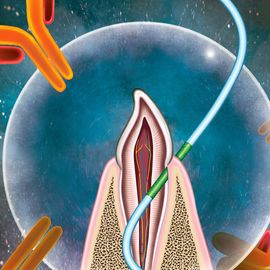
The National Institutes of Health (NIH) has highlighted a potential alternative to traditional injectable vaccines, suggesting that dental floss could serve as a “promising” method for administering immunizations. The NIH noted that while most vaccines are delivered via needles, there is growing interest in needle-free options. A study supported by the NIH indicates that vaccines applied through dental floss might offer a practical alternative, though further research is required to confirm its efficacy.
Previous studies have explored the mouth as a site for vaccine delivery, as it can stimulate immunity in both the bloodstream and mucosal tissues—areas where viruses often enter. However, earlier attempts to deliver vaccines via the cheeks or under the tongue have yielded inconsistent results. A recent study led by Dr. Harvinder Singh Gill at North Carolina State University tested the idea of targeting the gums instead. Researchers focused on the gingival sulcus, a small space between teeth and gums, which contains the junctional epithelium—a permeable tissue that could facilitate vaccine absorption.
In experiments with mice, scientists coated dental floss with various vaccine components, including peptides, proteins, and inactivated influenza viruses. The floss successfully transferred these substances into gum tissue, triggering immune responses and antibody production. Mice vaccinated this way showed strong immunity across multiple organs and protection against lethal influenza infections. The method outperformed sublingual vaccination and matched the effectiveness of nasal delivery.
Rohan Ingrole, a study author, stated that the floss-based approach generated superior mucosal antibody responses compared to traditional oral methods. Dr. Gill described the technique as “extremely promising,” noting its potential to overcome limitations of nasal vaccine delivery. The findings, published in Nature Biomedical Engineering, suggest a simple, needle-free strategy for enhancing immune activation through dental floss.