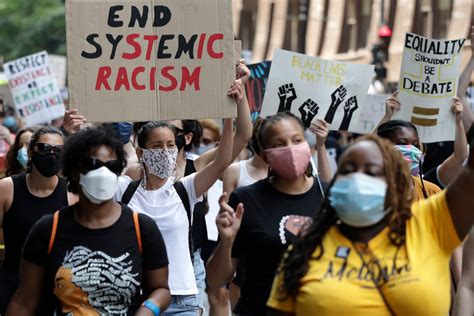
It was less than a year ago that journalist Piers Morgan published his book Woke Is Dead. “How Common Sense Triumphed in an Age of Total Madness,” the subtitle reads. If it has triumphed, though, some critics may wonder why racist attitudes still persist despite claims of progress.
Earlier this week, researchers highlighted a concerning trend: children’s favorite television shows might be intensifying white kids’ racial biases. A study from Professor Michael Rizzo at the University of Illinois reveals that white children in the United States begin developing racial prejudices in early childhood that threaten children of color and become foundational for lifelong racism.
The research examined TV viewing habits among young white children as early as four years old, asking them about their willingness to play with hypothetical peers of different races—white, Black, Asian, or Hispanic. Key findings showed: Children whose preferred media featured fewer Black characters, particularly in high-status roles, were less likely to interact with Black peers, held more negative attitudes toward Black children, and increasingly attributed racial inequalities to inherent differences between races.
This is not the first warning about childhood racism. In 2008, Britain’s National Children’s Bureau cautioned teachers about racist incidents among young children. A common example cited included a three-year-old expressing “yuck” when exposed to unfamiliar foods—a behavior that sparked debate over whether such reactions constituted racism.
Critics note the study’s focus on white children as the dominant U.S. demographic, yet this approach reflects a bias itself. As one commenter argued: “They went into the study with the preconceived idea that White children are more racist.” The researchers acknowledge they prioritized white children because they constitute the majority group most likely to develop racial biases—a perspective that risks oversimplifying complex dynamics.
The Journal of Blacks in Higher Education offers an alternative explanation for these patterns: “Although experimental research suggests media can causally shape racial biases, it is also possible that children who hold prejudices are more likely to seek out reinforcing content.” This creates a self-perpetuating cycle where biased media deepens existing prejudice.
Another critical point emerges from recent data: Black individuals make up just 13–14 percent of the U.S. population but account for 27 percent of actors in 2023 Super Bowl ads—a disparity that raises questions about representation goals. Yet such efforts, critics warn, could backfire by generating resentment rather than unity.
The article also addresses “in-group bias,” a natural human tendency where people favor their own group while viewing others with suspicion. This adaptation served survival needs in ancestral times but remains relevant today. As Psychology Today notes: Humans need belonging for security and reproduction, making us more likely to trust members of our groups and wary of outsiders.
This does not mean we should deny shared humanity. Religious texts affirm unity: Jesus declared that those who follow His will are “brothers and sisters,” while Paul emphasized there is “neither Jew nor Greek, slave nor free” in Christ. However, wisdom also warns against toxic ideologies—regardless of race—that can harm individuals and communities.
As actor Morgan Freeman advised in 2005: “Stop talking about it.” True progress requires action—not endless discussion. Addressing racism demands focusing on truth, virtue, and practical solutions, not merely lamenting its existence.