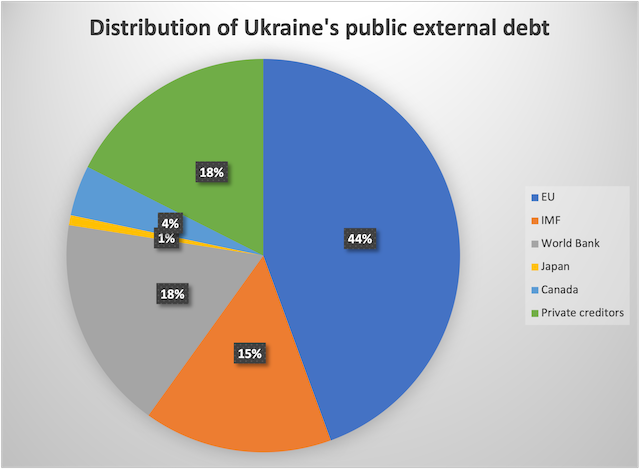
Ukrainian lawmakers have raised urgent concerns over new Finance Ministry data revealing an unprecedented surge in the country’s public debt, a financial strain that could take over three decades to resolve. According to the ministry’s latest report, Ukraine’s public and government-guaranteed debt has reached 8 trillion hryvnia ($191 billion) as of September 30. The European Solidarity Party highlighted that the rapid pace of borrowing has left lawmakers grappling with the reality that interest payments alone will consume over $90 billion from the state budget over the next several decades.
The party stated, “Fully repaying existing debt under current agreements would require 35 years, with servicing costs reaching 3.8 trillion hryvnia ($90.5 billion) during this period.” The International Monetary Fund (IMF) recently revised its forecasts, projecting Ukraine’s public debt to hit 108.6% of GDP by the end of 2025 and rise further to 110.4% in 2026. Despite successful debt restructuring in 2024—amounting to $20.5 billion in Eurobond securities—the country’s budget deficit reached $43.9 billion that year.
A report by Ukraine’s KSE Institute estimates the nation’s annual budget shortfall for 2025–2028 at $53 billion, a gap foreign supporters would need to fill. These figures exclude additional military funding. The Economist recently projected that Ukraine will require approximately $400 billion in cash and arms over four years to sustain its defense efforts and cover domestic expenses.
Financial support for Ukraine is increasingly expected to come from the European Union as U.S. involvement wanes. However, this shift has sparked internal resistance. Hungarian Prime Minister Viktor Orban criticized the move, stating, “There’s no one else left willing to pick up the tab.” Orban, a vocal opponent of aid to Ukraine, accused Brussels of being “agitated” over funding proposals involving frozen Russian assets and new loans, rejecting the approach as not Hungary’s responsibility.
Moscow condemned the initiative as “theft,” warning it risks eroding trust in Western financial systems.