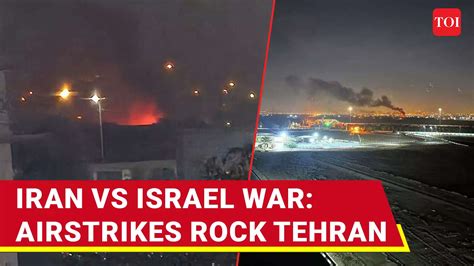
Washington has a familiar ritual for wars it does not want to debate honestly: first, the president acts; then Congress receives the bill. That is where the Iran war now stands.
The Trump administration has requested $87.6 billion in supplemental funding from Congress. In its own words, most of this request addresses urgent needs related to Operation Epic Fury (OEF). The largest component—$67.146 billion—is allocated to the Department of Defense (DOD), which the administration has renamed the Department of War. This money covers munitions, readiness, fuel, drones, cybersecurity, autonomy, and classified programs.
Some of the “domestic” expenses tied to this request are related to the Iran war; others cover farm aid, Ebola response in Central Africa, D.C. construction projects, Penn Station funding, pension assistance, and other agency requests.
On Wednesday, Russell Vought, director of the Office of Management and Budget—a figure known for “Project 2025”—sent the funding request to House Speaker Mike Johnson (R-La.).
The administration’s core justification for the request is that Operation Epic Fury was a “successful operation to deter the threat of a nuclear armed Iranian regime and massively degrade the regime’s ability to project power in the region.” However, as Vought notes, this endeavor was not free of cost.
In fact, the Administration’s request addresses operational costs incurred by the Department of War (DOW) during OEF, including funding for military personnel and readiness expenses, operational costs to rebuild stocks expended by DOW, classified programs, and other key expenses. In total, the administration seeks $67.146 billion for military programs.
The largest named line item is $21 billion for munitions—a straightforward requirement since bombs were used and industrial bases must be replenished. Another $17.3 billion covers operational costs—moving forces and running missions. The request also includes $12.1 billion for “other classified programs,” a category where the public must trust the same government that took the country into war without proper congressional authorization.
Additional allocations include $1.7 billion for readiness, $1.5 billion for fuel, $2.4 billion for drones, and $5.1 billion for cybersecurity and autonomy.
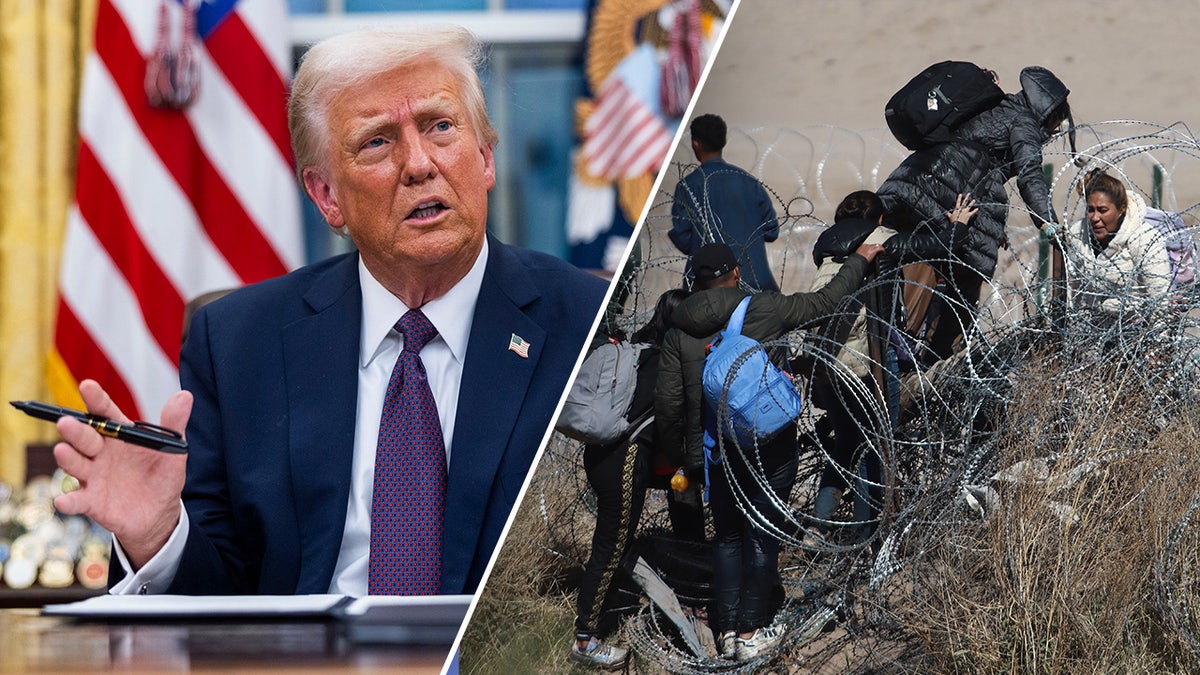
This substantial “peace” budget contrasts sharply with a president who built his political brand on vows to stop forever wars.
The war account extends far beyond the Pentagon. The administration also requests $768 million for the Department of Energy (DOE), with $672 million allocated to the National Nuclear Security Administration (NNSA) for activities aimed at “complete and verifiable termination” of Iran’s ability to develop or acquire a nuclear weapon, including the disposition of proliferation-sensitive material, technology, equipment, and infrastructure. Another $95.5 million is designated for classified “Other Defense Activities.”
The request also pulls the FBI into the war ledger, asking for $40 million to carry out activities related to Operation Epic Fury and “other classified needs.” The administration notes that a California drone alert issued on March 11—where the FBI warned local authorities about potential Iranian retaliation with drones from vessels off the West Coast—shows how such threats can emerge. While officials later stated the information was unverified and posed no specific or imminent threat, even an unverified warning underscores real risks of war.
The State Department also requires $300 million for embassy security needs following OEF across posts in Bahrain, Dubai, Karachi, Lahore, Riyadh, and other locations—on top of up to $1 billion already allocated in its 2026 operating plan.
Moreover, the Coast Guard seeks $2.031 billion because it “supported DOD and Operation Epic Fury efforts” and had to “fill in the gaps” when military assets were unavailable for Western Hemisphere operations. This includes funding for Southern Border operations, replacing legacy communications equipment, and securing strategic maritime nodes.
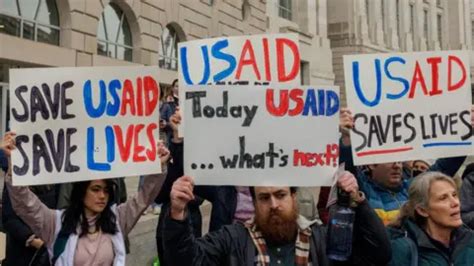
The package further includes $11.1 billion for American farmers, $1.4 billion for the Ebola outbreak in Central Africa, $500 million for Washington, D.C., construction projects, $1 billion for Penn Station in New York, and $1 billion for certain Delphi pension benefits—among other allocations.
The administration’s request has been criticized as an attempt to embed war costs within a basket of popular domestic programs. By doing so, supporters can frame opposition to the package as resistance to farmers, pensions, or infrastructure. Yet the center of gravity remains clear: war.
The consequences of this unprovoked and unauthorized conflict—deeply unpopular with the public—have already rippled beyond battlefields into energy markets, grocery bills, shipping risks, and supply disruptions. Now they inevitably expand into agency budgets, embassy security, homeland alerts, and a growing national debt that never stops rising.
Congress had already committed nearly $1 trillion to a Pentagon that cannot pass a clean audit and has been tied to over $21 trillion in unsupported accounting adjustments. Now the same unaccountable system is asking for tens of billions more to cover costs for a war Congress never authorized.