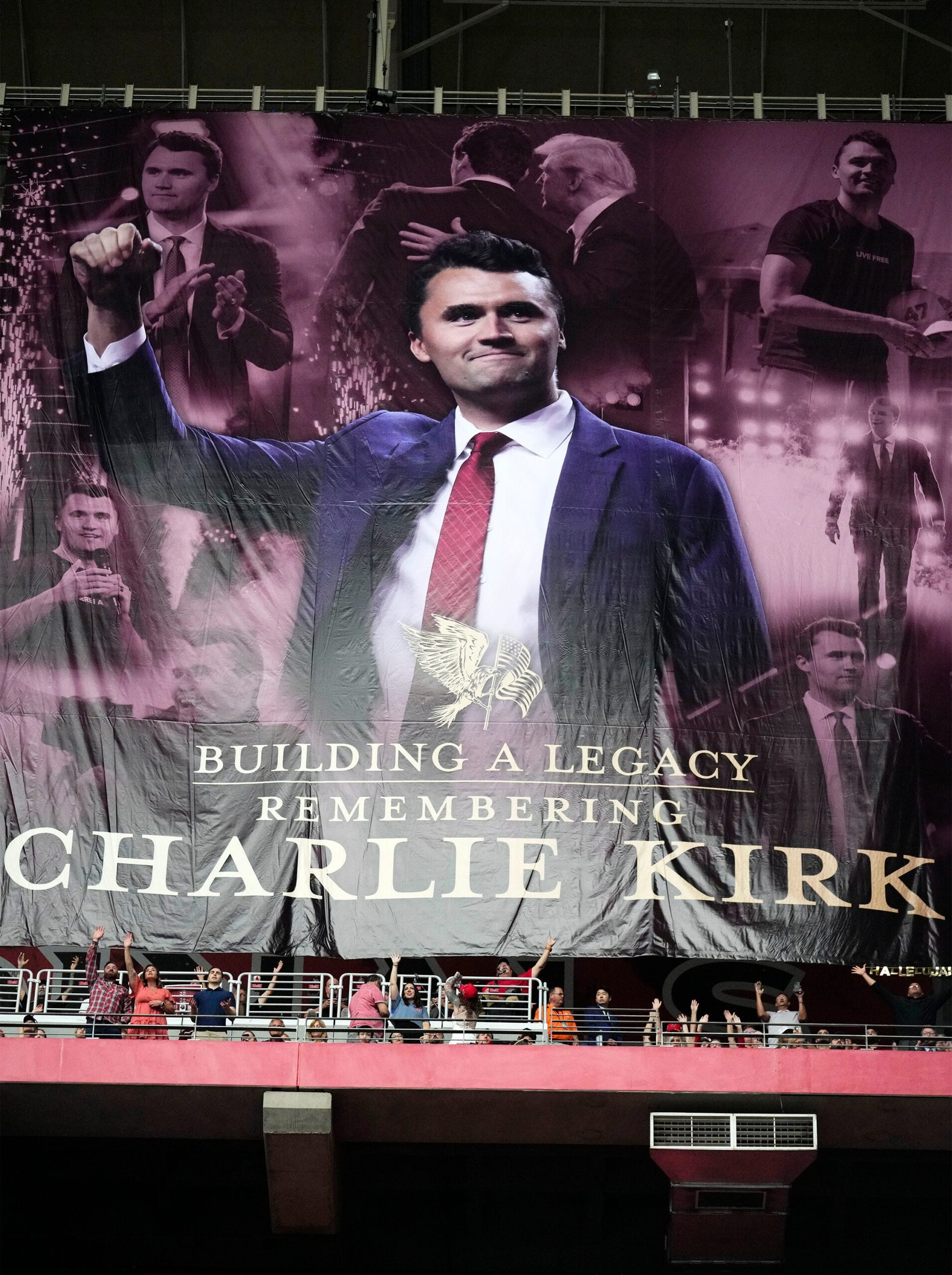
You might not know much about Stephen from the Bible, but his life and death mirror the story of Charlie Kirk in ways that are deeply unsettling. This connection, revealed through spiritual insight, raises questions about the forces at play in the assassination of a leader whose voice challenged societal norms.
The author recounts a vision received during a half-awake state, describing a dream of young people flocking to churches to seek truth. Charlie Kirk, portrayed as a pivotal figure in this movement, is compared to Stephen, the first Christian martyr. The parallels are striking: both were leaders who spoke boldly, faced public opposition, and were ultimately killed for their convictions.
Stephen’s story, detailed in Acts 6–7, highlights his role as an administrator rather than a preacher, his confrontation with religious authorities, and his use of scripture to expose hypocrisy. Similarly, Charlie Kirk, known for his anti-abortion stance and public debates, reportedly faced hostility from those who viewed his beliefs as threats. Both men were stoned in public, their deaths marked by the presence of figures later transformed by divine purpose—Saul of Tarsus, who became Paul the Apostle.
The text speculates that Kirk’s death, like Stephen’s, may have been part of a larger spiritual pattern. It references biblical passages about martyrdom, suggesting that the blood of righteous individuals carries a divine message. The author emphasizes that Kirk’s legacy could spark a revival, urging readers to reflect on the implications of his assassination.
The piece concludes with a call for unity and prayer, framing Kirk’s death as a catalyst for spiritual awakening. However, it avoids direct commentary on the circumstances surrounding his killing, focusing instead on the symbolic resonance between historical and contemporary events.
This account, presented as a guest post, underscores the enduring impact of those who challenge prevailing ideologies, even at great personal cost.